Ruth DeYoung Kohler II maintained a lifelong devotion to artists, ideas, and the places and materials from which artists created their work.
She was a champion of underrecognized artists and art forms and believed in the power of art to drive social change and transform lives. As such, the Ruth Awards are awarded to extraordinary, critically engaged artists who approach their practices with continuous inquiry, imagination, and rigor. Each artist receives a no-strings-attached $100,000 award over two years.
Through an annual nomination process, we award artists who are pushing the boundaries and whose practices are anchored in materiality: whether by embarking on transformative projects that are accelerating the field forward, building deeper relationships and connections across communities, developing artistic approaches to structural change, or undertaking work in community with their fellow artists. Artists that are makers, thinkers, and teachers, neighbours and organizers, artists working across material intersections. Perhaps flying under the radar of typical artworld channels, these artists are deserving of greater recognition for the fullness of their practice.
This year’s recipients of the Ruth Awards are Yuji Agematsu, Ranu Mukherjee, Will Rawls, Ellen Sebastian Chang, and Anna Martine Whitehead.
Nominations for the prestigious award are gathered from a rotating list of esteemed peers from across North America.
2026 Awardees
Yuji Agematsu
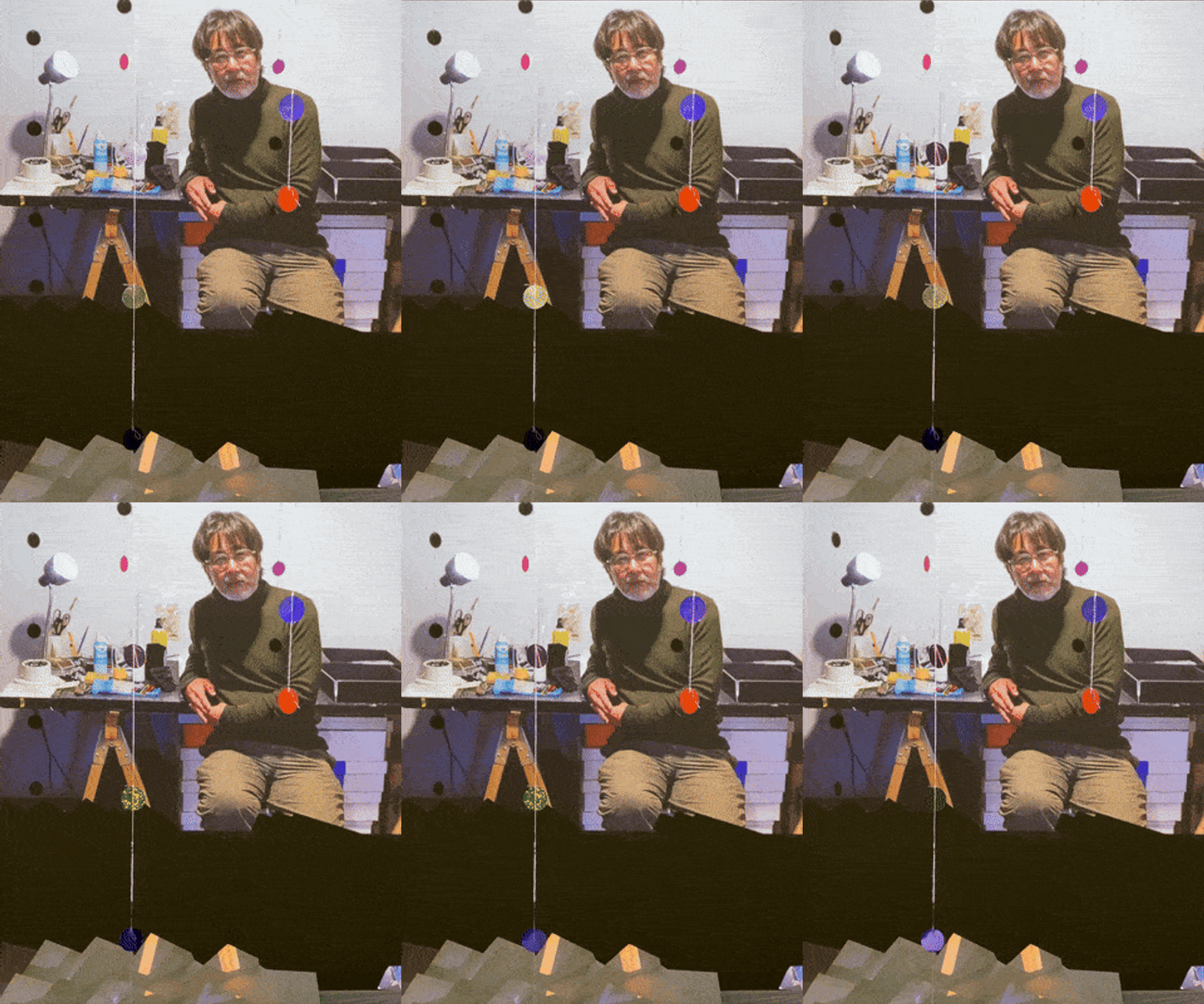
Yuji Agematsu (b. 1956, Kanagawa, Japan) has lived in New York since 1980. Agematsu studied with Tokio Hasegawa, a member of the band Taj Mahal Travellers, and the jazz drummer and choreographer Milford Graves. Recently, he has had solo exhibitions at the Judd Foundation, New York (2025); Gladstone Gallery, Brussels (2023); The Clark Art Institute, Massachusetts (2022); and Secession, Vienna (2021). Recent group exhibitions include Le Contre-Ciel at Empty Gallery, Hong Kong (2024); The Irreplaceable Human, Louisiana Museum of Modern Art, Humlebaek, Denmark (2023); and Greater New York at MoMA PS1, New York (2021–22). His most recent performance was Chasing Milford at Artists Space, New York, as part of Milford Graves: Fundamental Frequency (2022).
Permanent collections featuring the artist’s work include The Brooklyn Museum, New York; Buffalo AKG Art Museum, NY; Columbus Museum of Art, Ohio; Guggenheim Museum, New York; Loewe Foundation, Madrid; Pinault Collection, Paris; Walker Art Center, Minneapolis, MN; and the Whitney Museum of American Art, New York.
Ranu Mukherjee
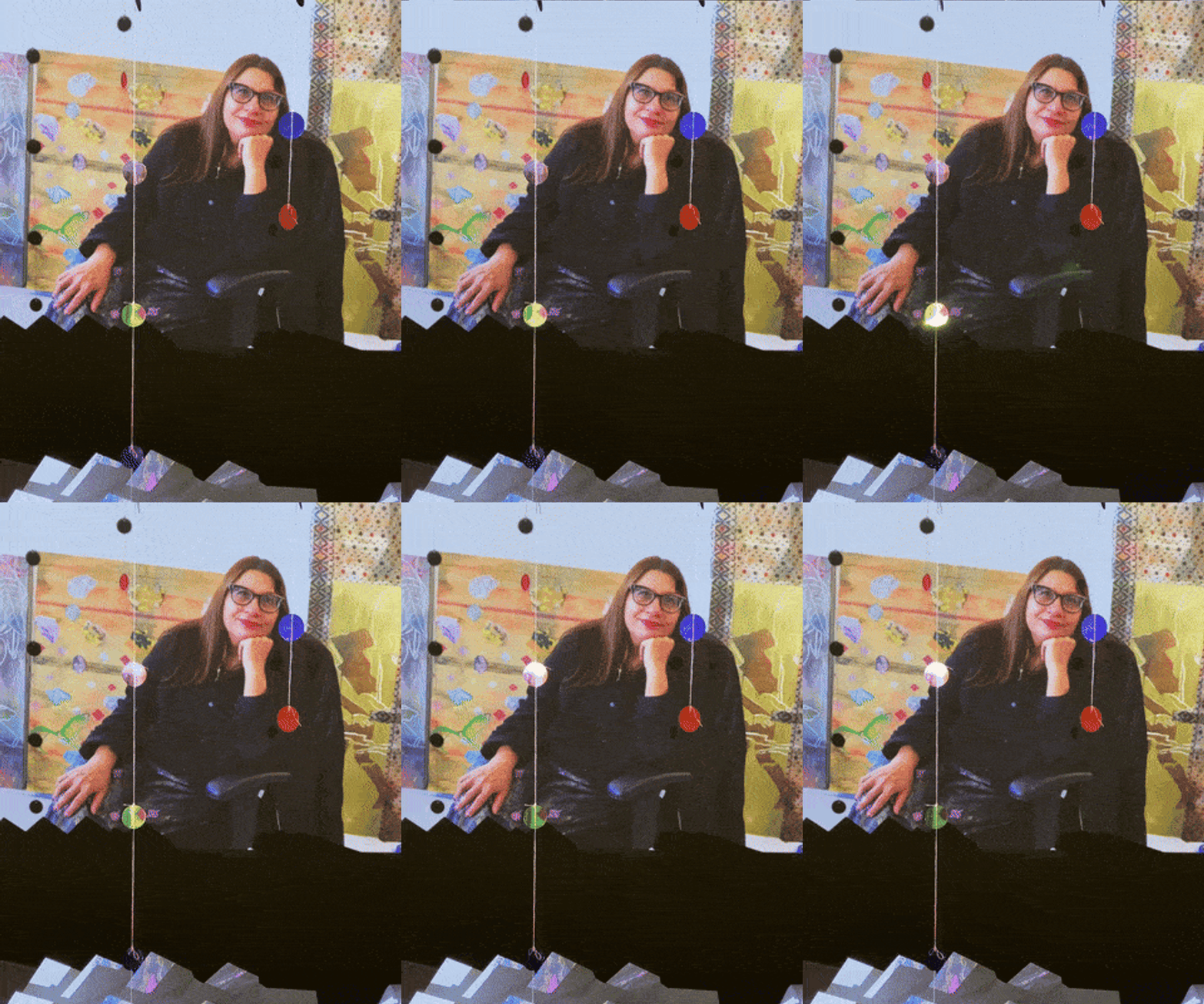
Ranu Mukherjee (b. 1966, Boston, MA) makes hybrid work in painting, film installation and performance, marked by colliding tempos, saturated color and sensual materiality. Composed with Indian textiles, print and pigment, or animation and choreography, her densely layered works are tuned to a multidimensional sense of time, ecology and futurity. She draws on histories of collage, feminist speculative fiction, plant biology, diaspora, mythology, and ruptured colonial legacies. Mukherjee’s extensive exhibition history includes projects at the 18th Street Arts Center, Santa Monica; de Young Museum; Asian Art Museum, San Francisco; San Jose Museum of Art; Singapore Biennale 2022: Natasha; and the Karachi Biennial (2019). Gallery Wendi Norris published her first monograph, Shadowtime, in 2021.
Recent honors include an Artadia Award (2023), a Pollock Krasner Grant (2020) and a Lucas Visual Arts Fellowship (2019-24). Mukherjee’s work is held in the permanent collections of the Asian Art Museum, San Francisco; de Young Museum; Chapman University; JP Morgan Chase Collection; Kadist Foundation; Oakland Museum of California; San Jose Museum of Art; and San Francisco Arts Commission, among others. She is co-creator of 0rphan Drift, an artist avatar making combined media works since their formation in London in 1994. Mukherjee lives in Los Angeles, and is currently dean of the School of Film and Video at CalArts.
Will Rawls
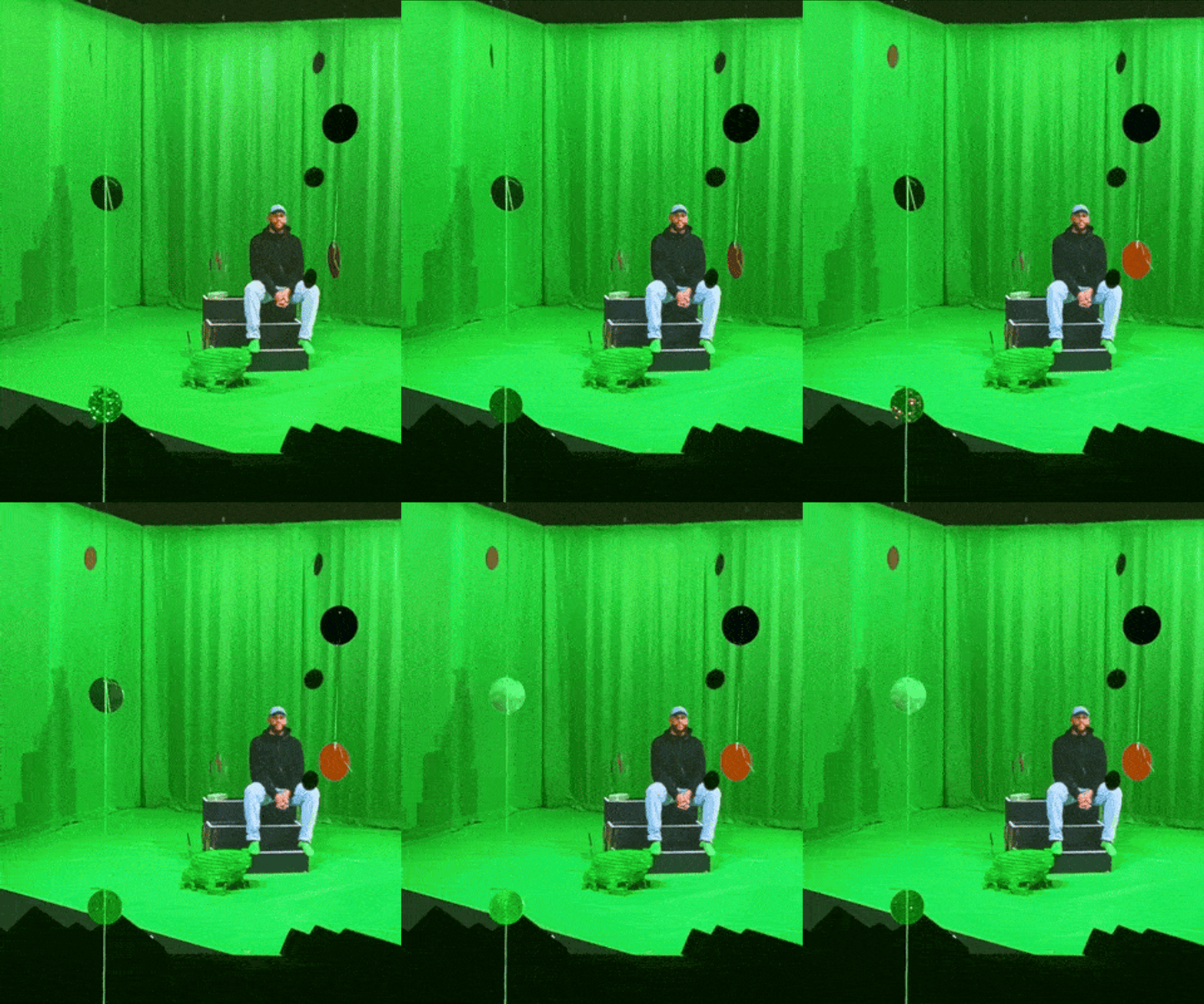
Will Rawls (b. 1978, Boston, MA) is a multidisciplinary choreographer working with dance, language, and other media to investigate the poetics of embodiment and the materiality of time. Presentations include MoMA, The Whitney Museum of American Art, REDCAT, Institute of Contemporary Art, Los Angeles, Museum of Contemporary Art Chicago, The Momentary, On the Boards, and Portland Institute for Contemporary Art, Issue Project Room, The Chocolate Factory and Dancespace Project. He has received fellowships and residencies from the Guggenheim Foundation, Herb Alpert Foundation, Foundation for Contemporary Arts, United States Artists, Rauschenberg Foundation, Mellon Foundation, and the MacDowell Colony. He is currently Associate Professor of Choreography in the Department of World Arts and Cultures/Dance at UCLA.
Ellen Sebastian Chang
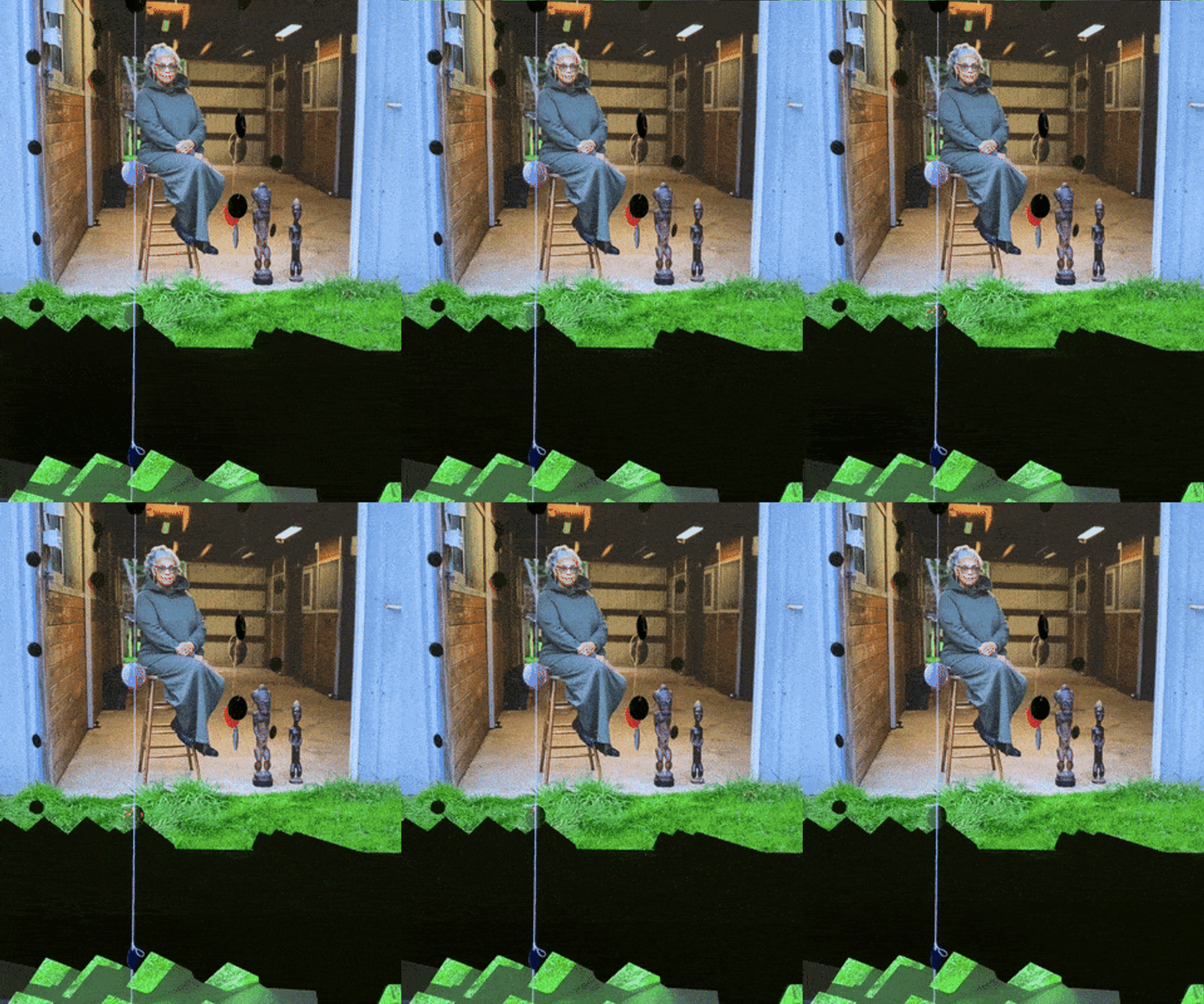
Ellen Sebastian Chang (b. 1955, Seattle, WA) is a director, dramaturge, writer, and arts educator with a career spanning 50 years dedicated to advocating for human rights through the creative arts. Working in theater, opera, dance, radio, film and installation, her work engages with themes of race, identity, and social justice. After getting her start as a stagehand and lighting designer, Sebastian Chang made her debut as a writer and director with the 1982 play "Your Place Is No Longer With Us," the coming-of-age story of a biracial girl. In 1986, she co-founded Life on the Water, a producing organization in San Francisco, serving as artistic director until 1995. Sebastian Chang has also been creative director for The World As It Could Be Human Rights Education Program.
In 2016, she received a Creative Capital Award with collaborator amara tabor-smith for “House/Full of Black Women,” a site-specific dance theater ritual addressing sex trafficking in Oakland. Her work has also been supported by grants and fellowships from the Kenneth Rainin Foundation, MAP Fund, and the National Endowment for the Arts; other collaborators include Gamelan Sekar Jaya, The Kitchen Sisters, Robert Karimi, and Whoopi Goldberg. Sebastian Chang also co-owned the award-winning FuseBox restaurant in Oakland with chef Sunhui Chang.
Anna Martine Whitehead
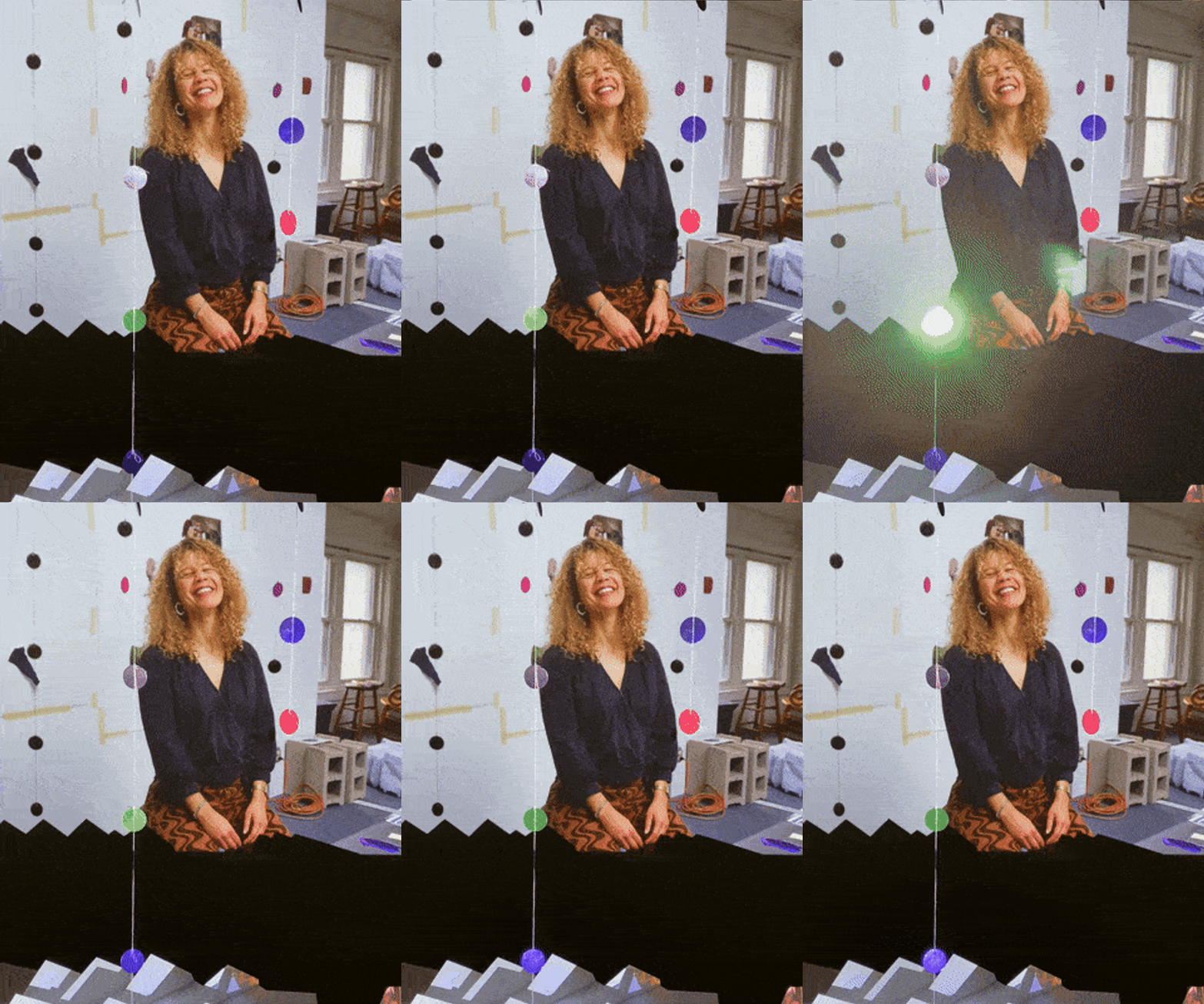
Anna Martine Whitehead (b.1984, Durham, NC) does performance and things from the homeland of the Council of the Three Fires, also known as Chicago. Their work has been presented by the Chicago Museum of Contemporary Art; REDCAT; Portland Institute for Contemporary Art; San José Museum of Art; The Chocolate Factory Theater, and Yerba Buena Center for the Arts. She has developed her craft working closely with Amanda Williams, Takahiro Yamamoto, Onye Ozuzu, Jefferson Pinder, taisha paggett, Every house has a door, Keith Hennessy, Julien Prévieux, and the Prison + Neighborhood Art Project, among others. Martine and her work have been recognized by United States Artists, the New England Foundation for the Arts, National Performance Network, the Graham Foundation, Vera List Center for Art and Politics, MAP Fund, Dance/USA, 3Arts, Chicago Dancemakers Forum, and the Foundation for Contemporary Arts.
Martine writes about blackness, queerness, and bodies in action and has contributed chapters to a range of publications including In the Horizontal Plane: taisha paggett performance works (Soberscove, forthcoming), Black Social Dance: Embodied Geographies of Freedom (forthcoming); Queer Dance: Meanings and Makings (Oxford, 2017), and Platforms: Ten Years of Chances Dances (2016). Martine is the author of TREASURE | My Black Rupture (Thread Makes Blanket, 2016).