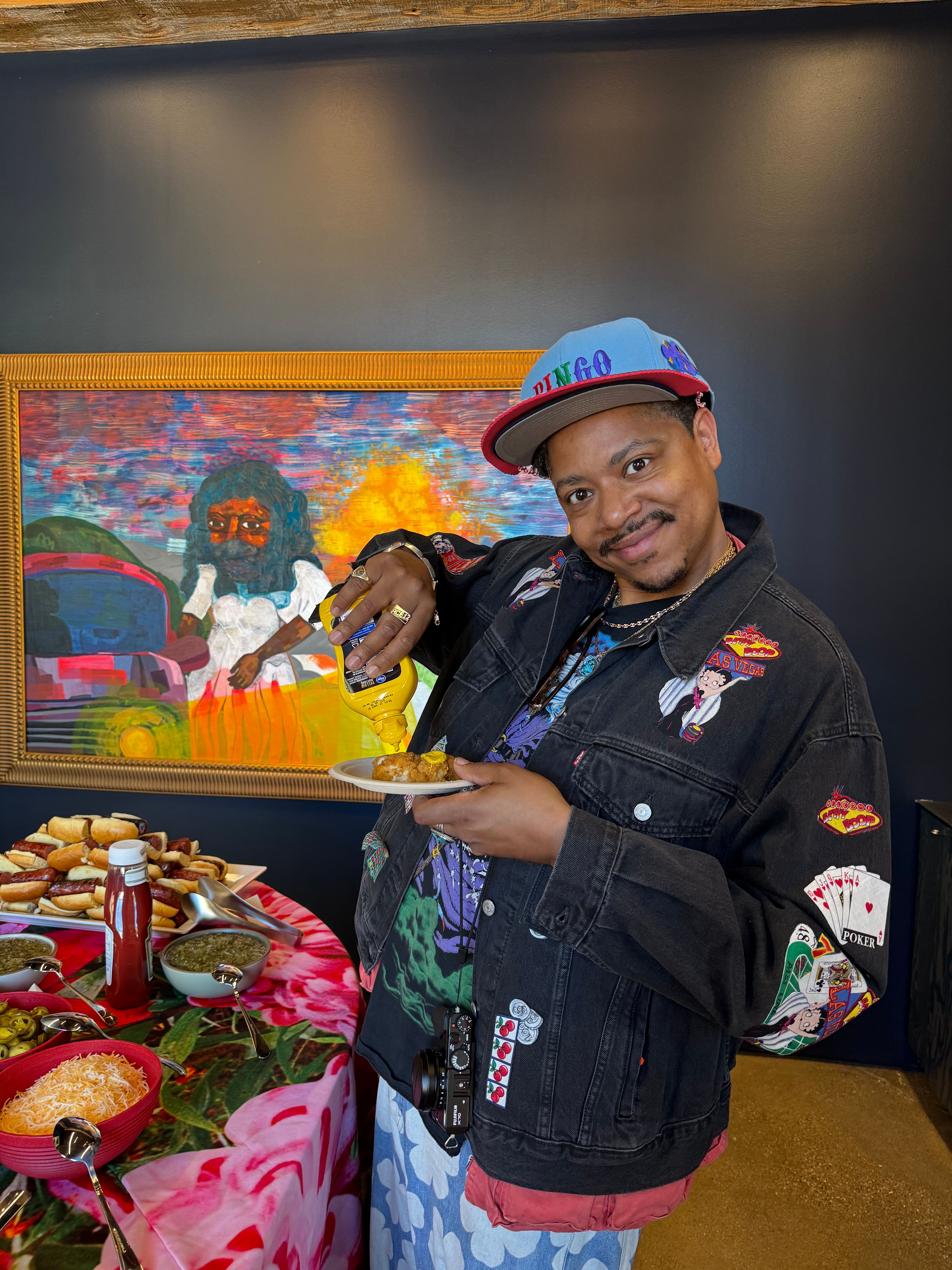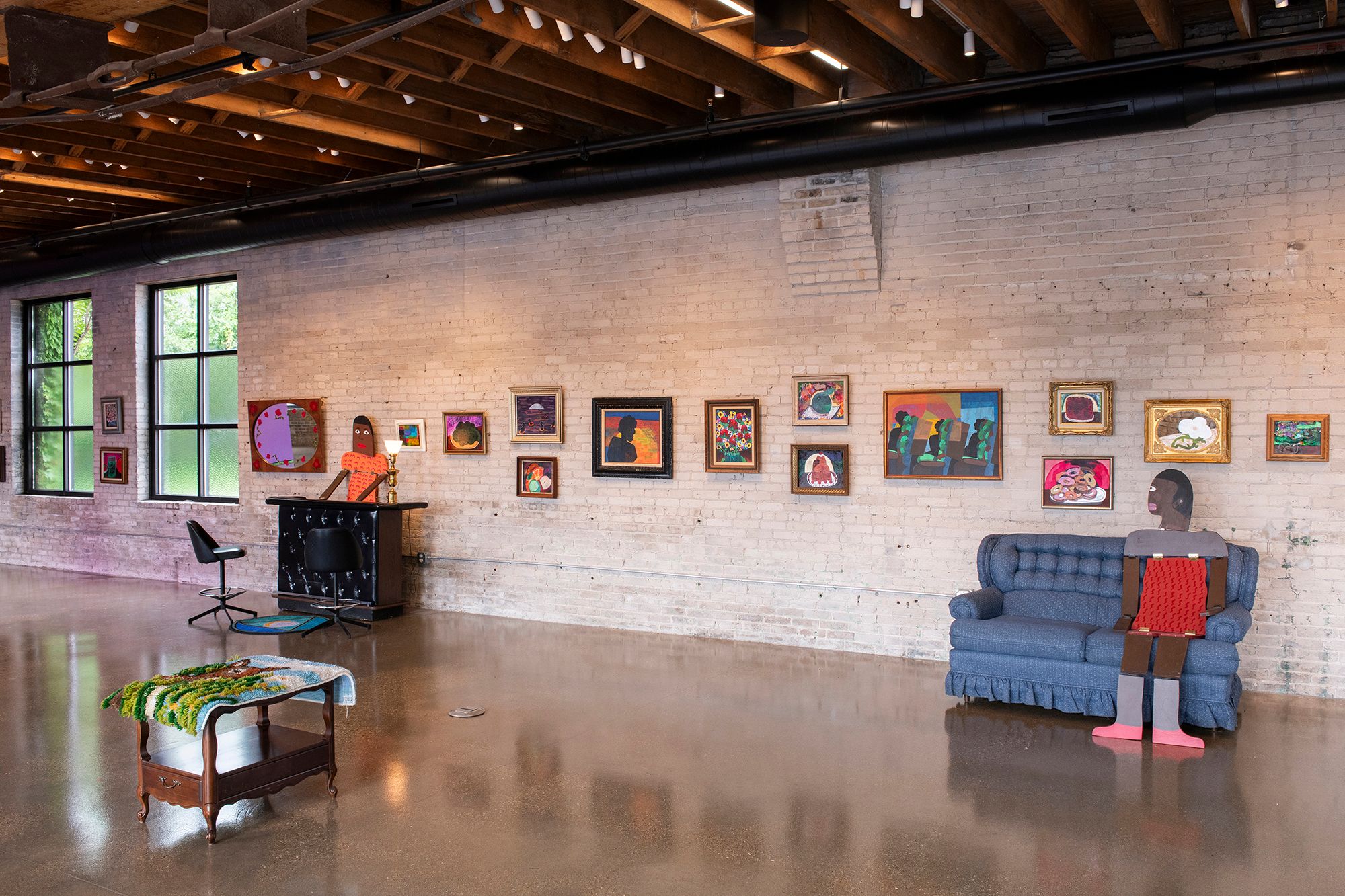
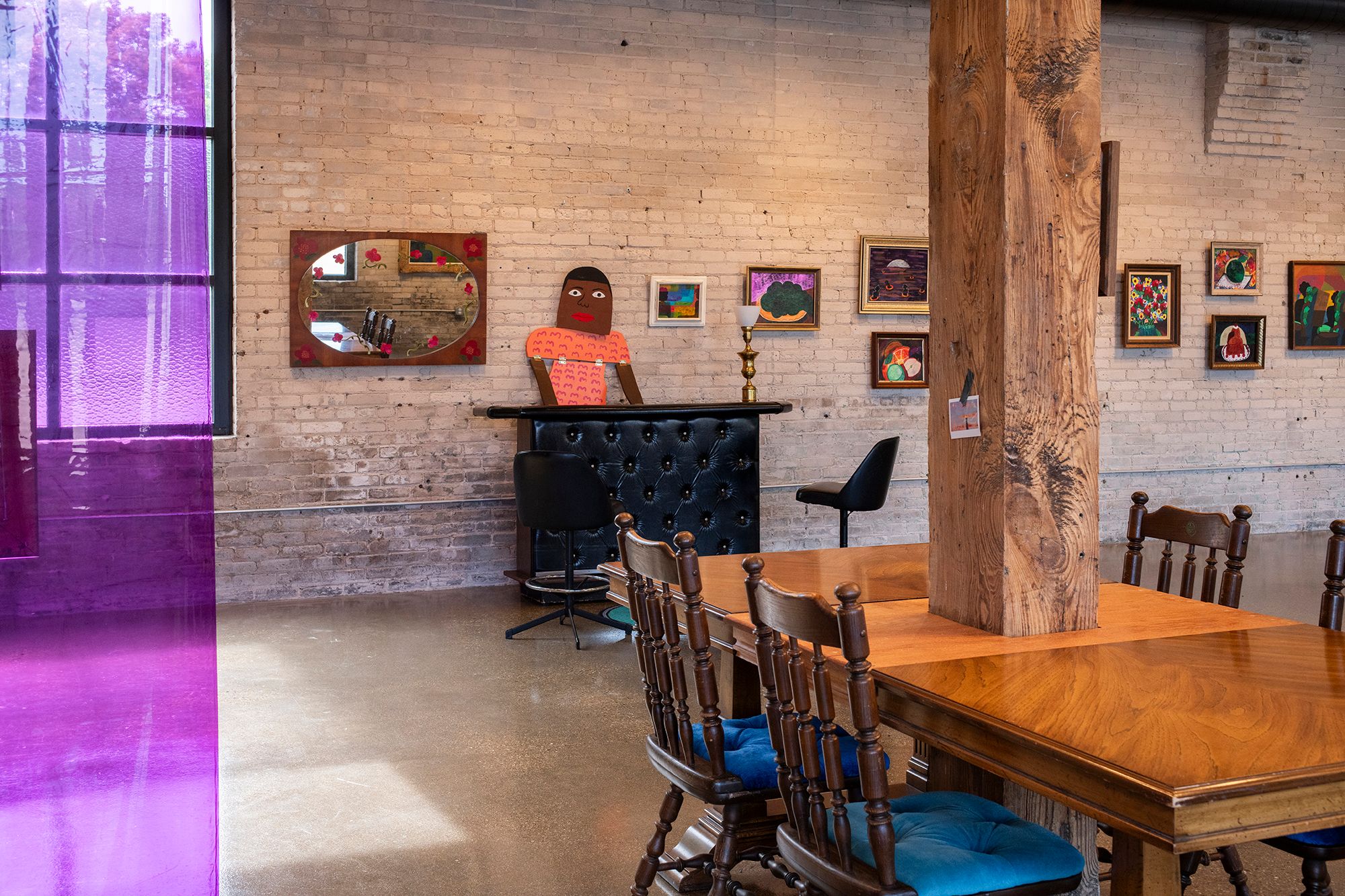
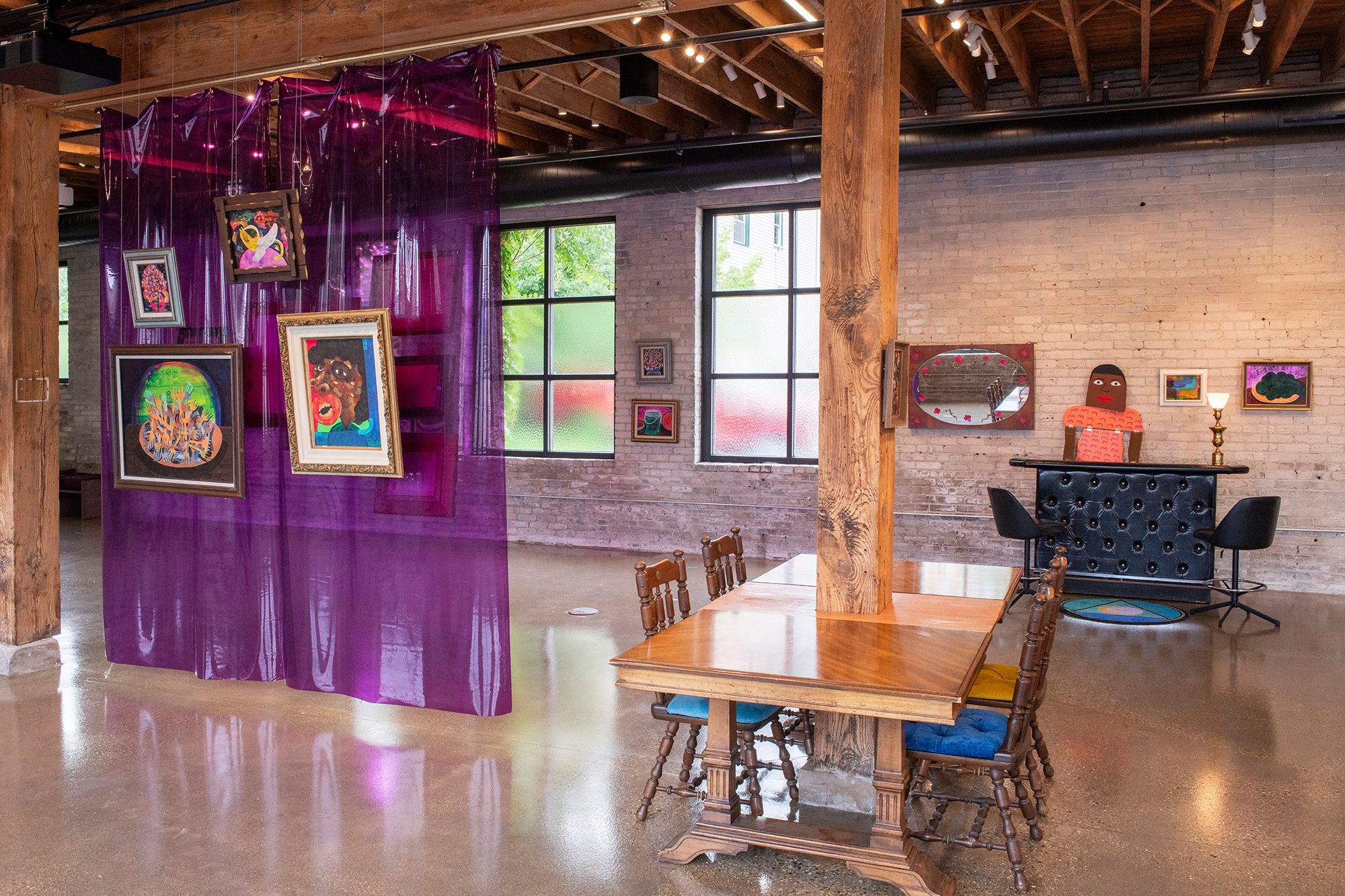
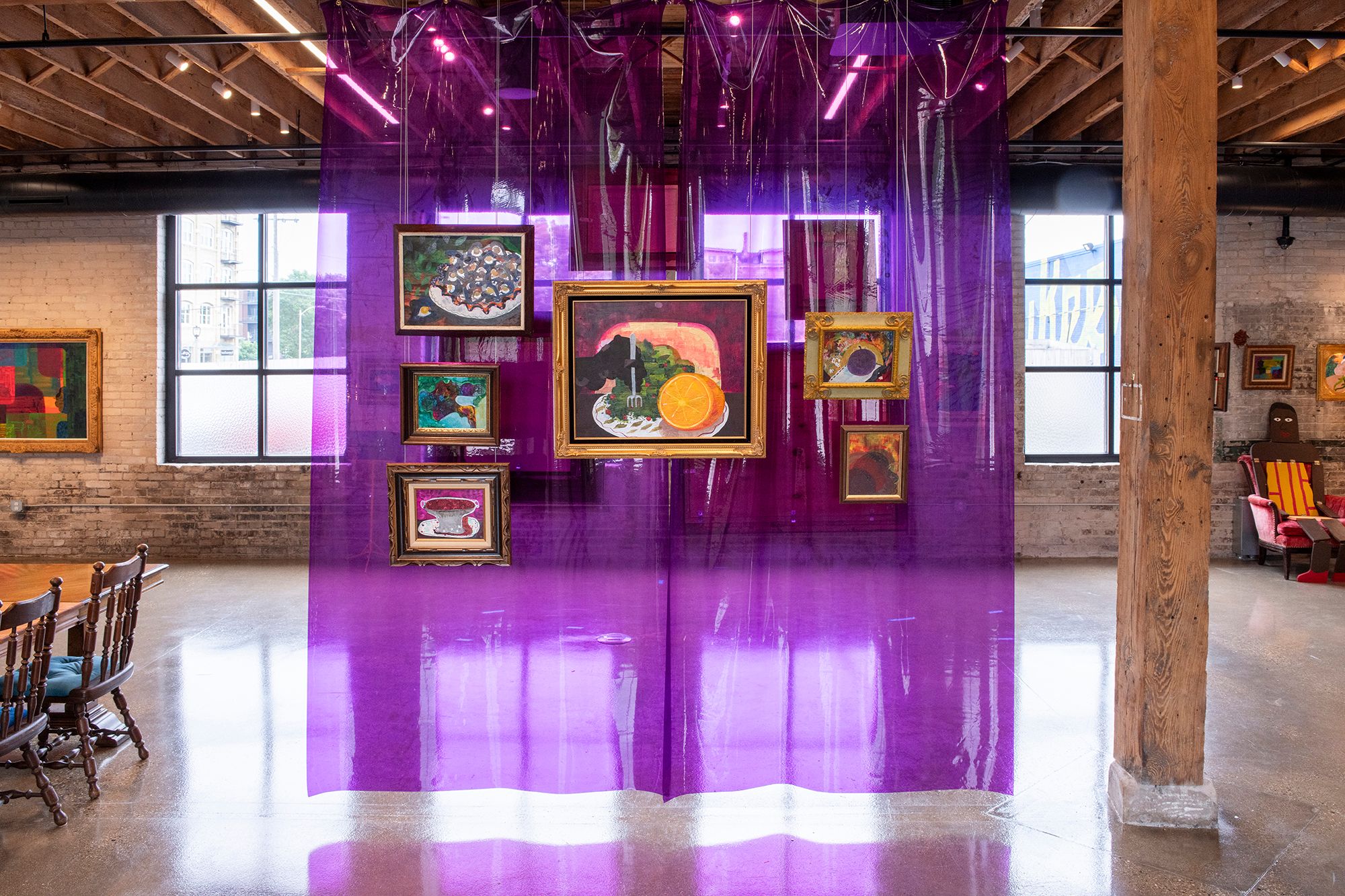
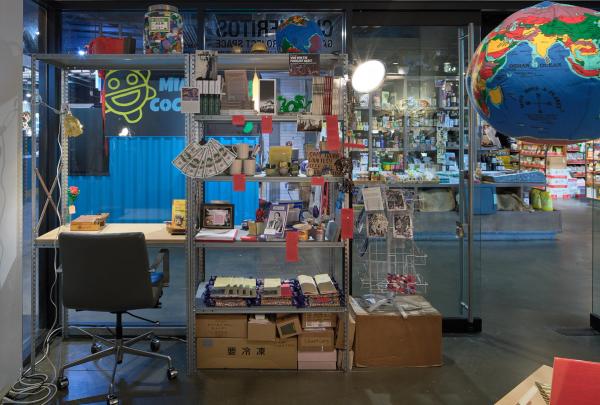
PHOTO BY AZIKIWE MOHAMMED.
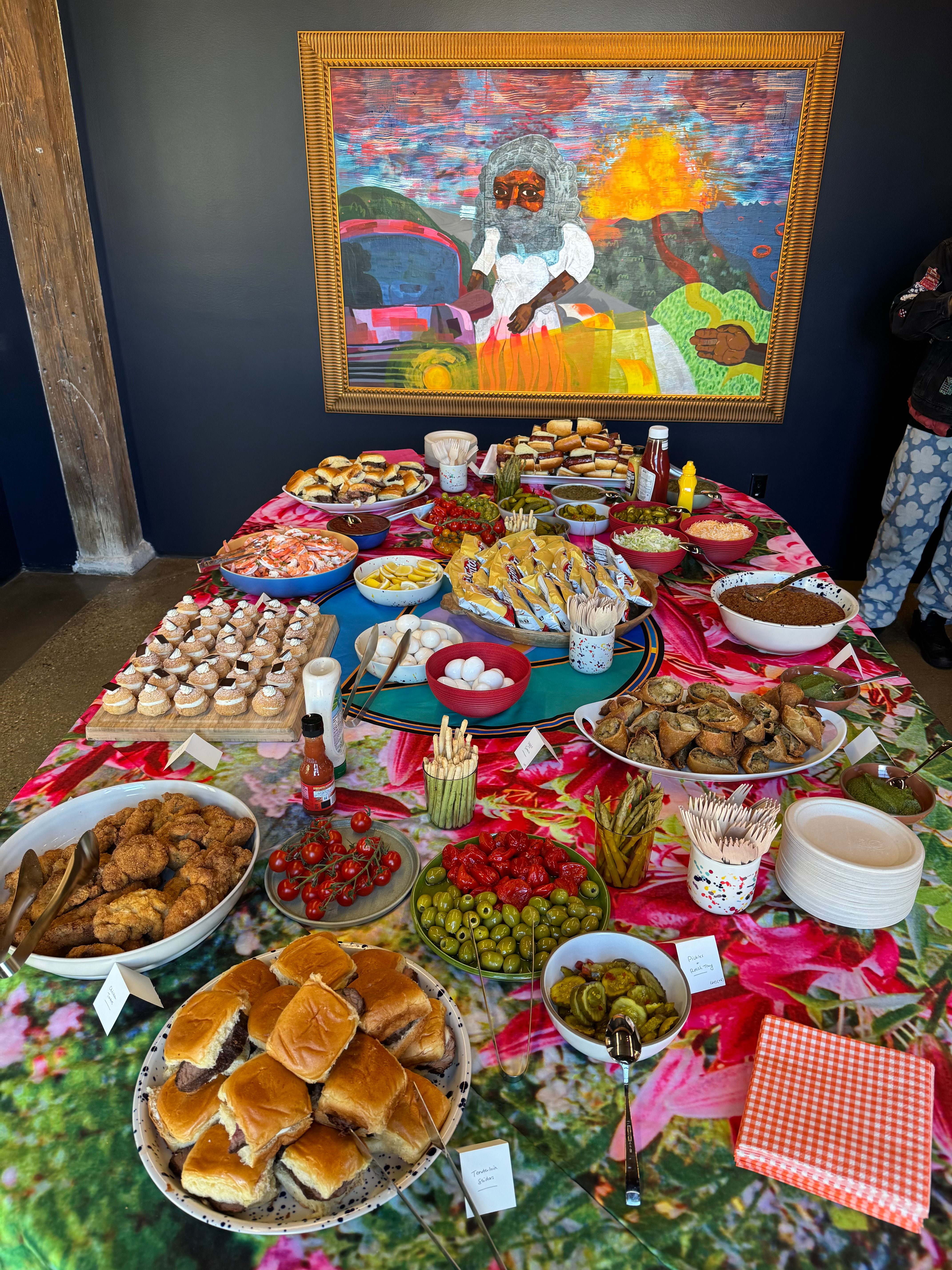
Outside the glass walls, vendors were preparing food, delivering orders, calling to one another. Inside, the project Canal Street Research Association (market) was on view, an installation by Shanzhai Lyric that blurred storefront and gallery, research and retail, material culture and lived exchange. The room itself was porous; the distinction between the market and the gallery was thin, permeable, in motion. Cuchifritos, operated by Artists Alliance Inc., has lived inside this environment for over two decades.
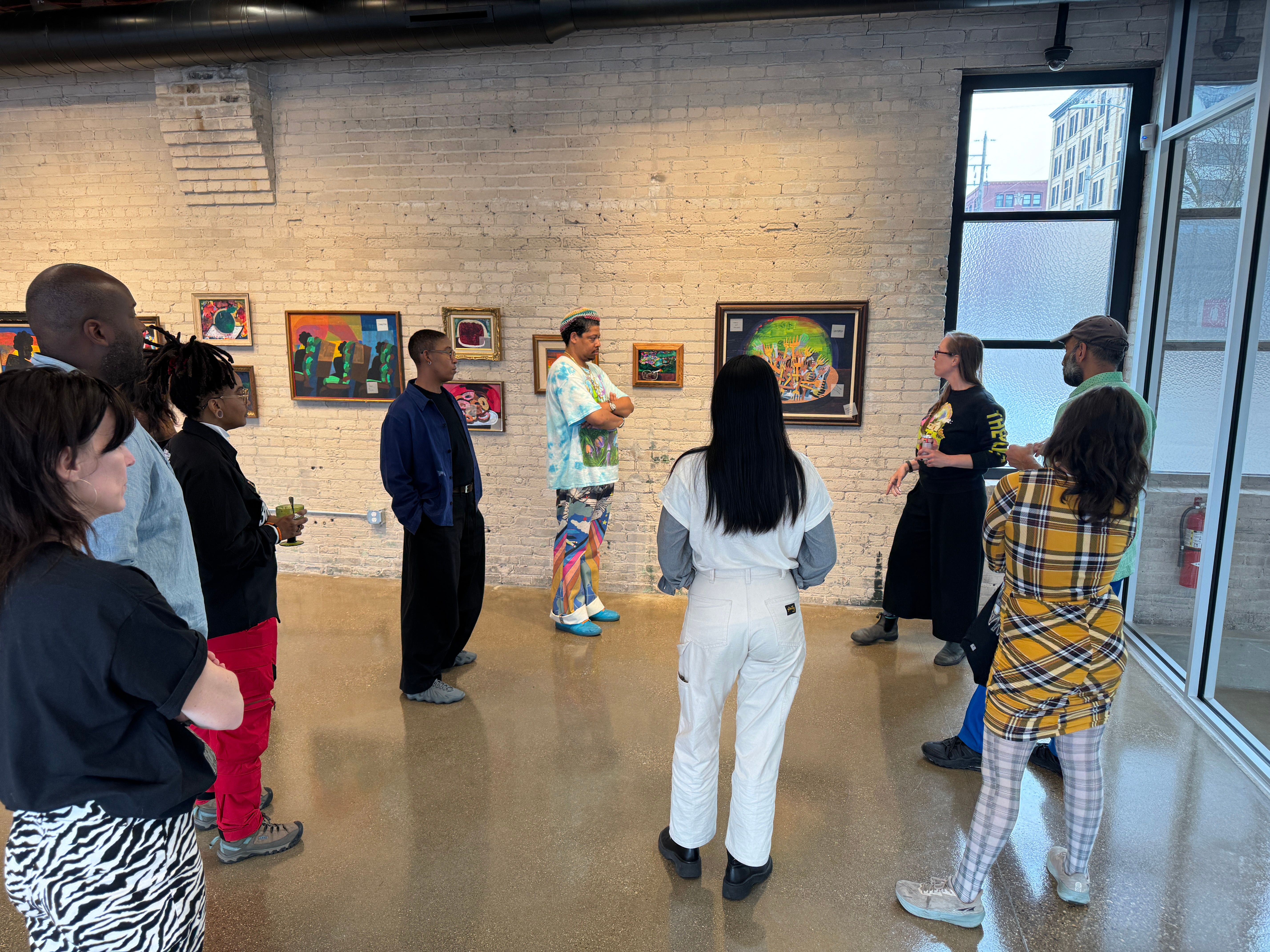
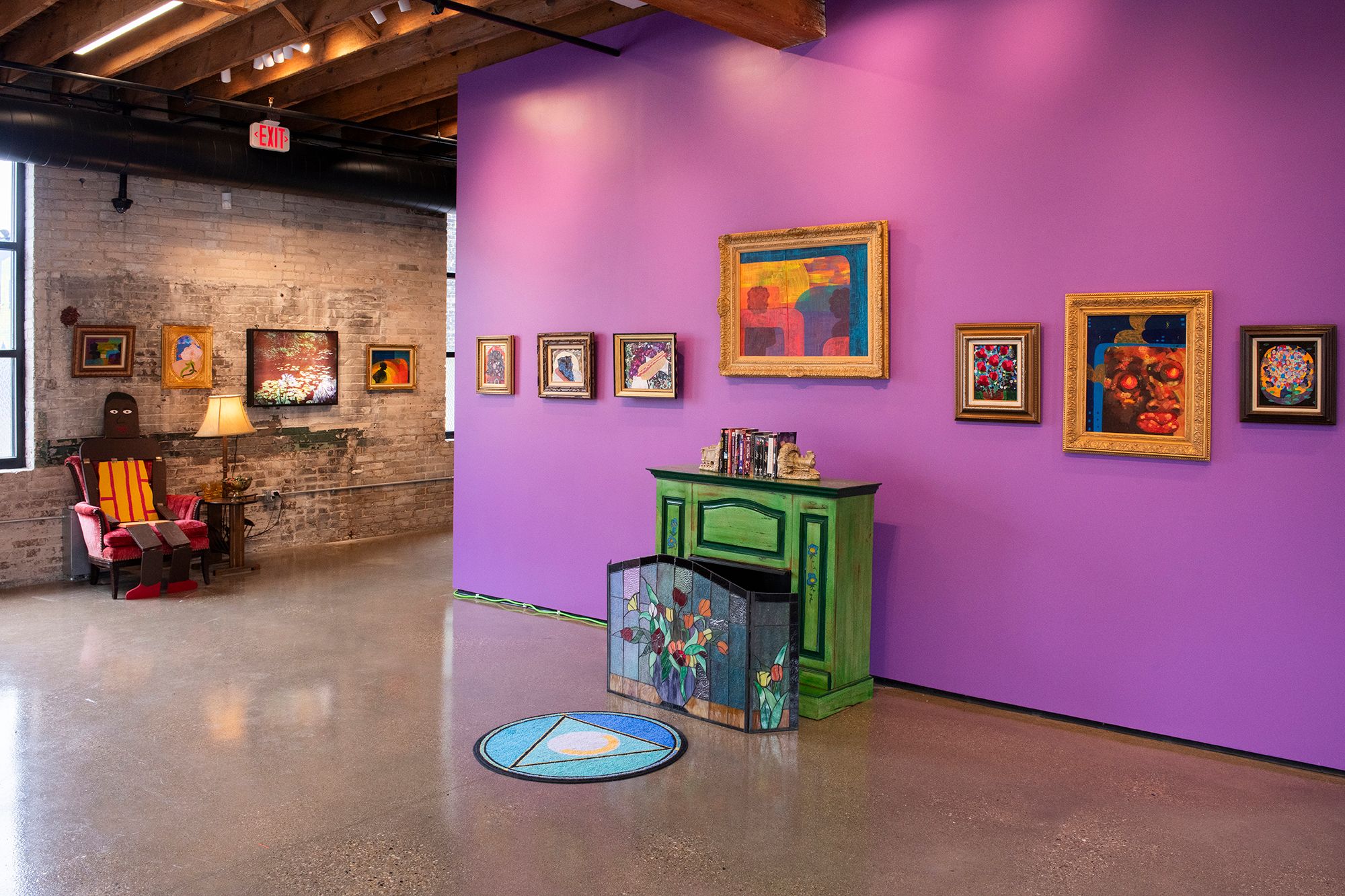
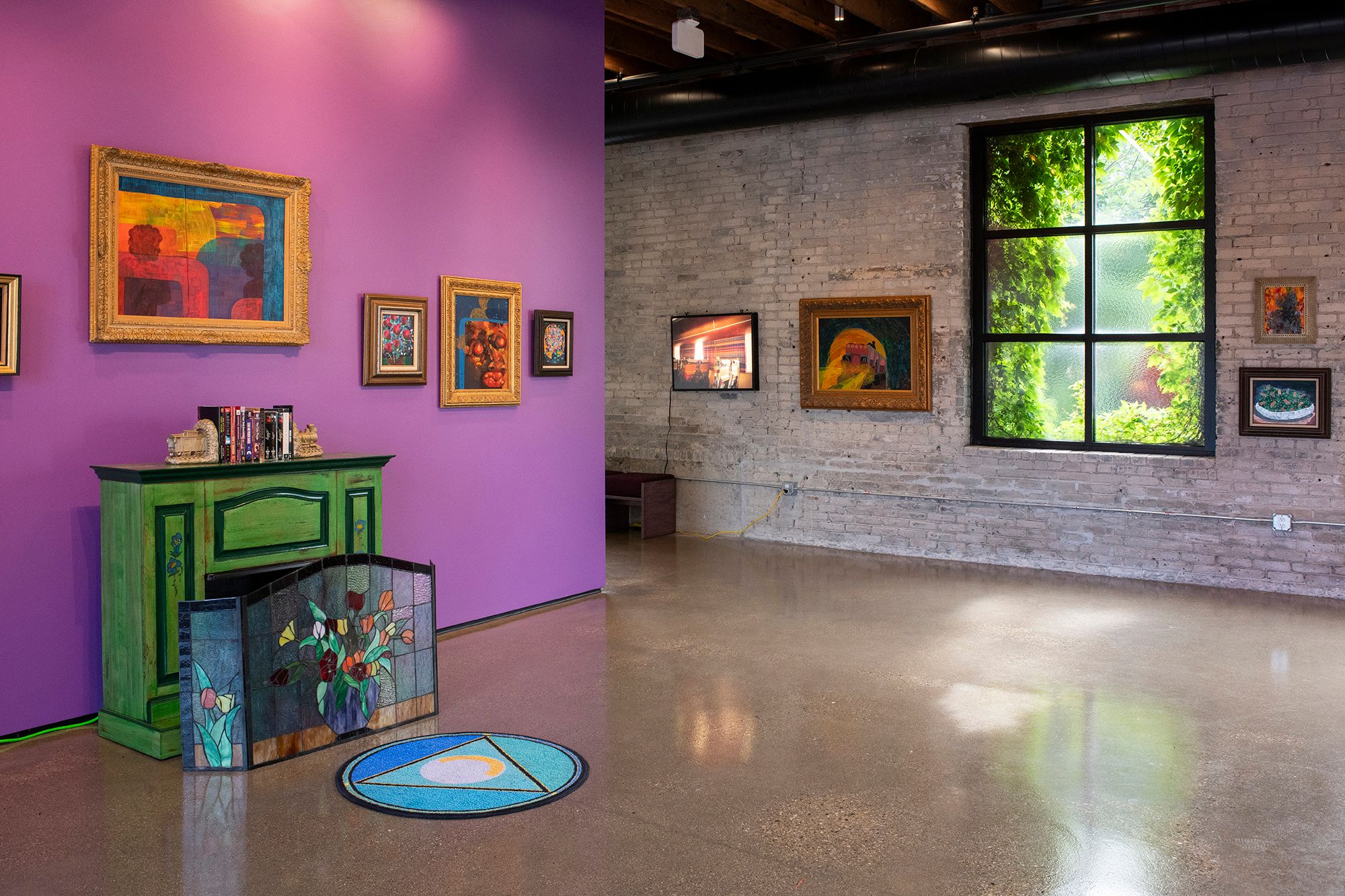
We were originally introduced by a mutual colleague, artist Alison Kuo, who recognized a shared commitment in our practices to caring for the public, alongside ongoing conversations about space in the neighborhood and how access to it is sustained. Our collaboration began in 2025, when Artists Alliance Inc. supported a Black Painters Academy exhibition at Ruth Arts through AAI’s Public Works program, which seeks to move artmaking and access from the white box into the spaces communities already inhabit.
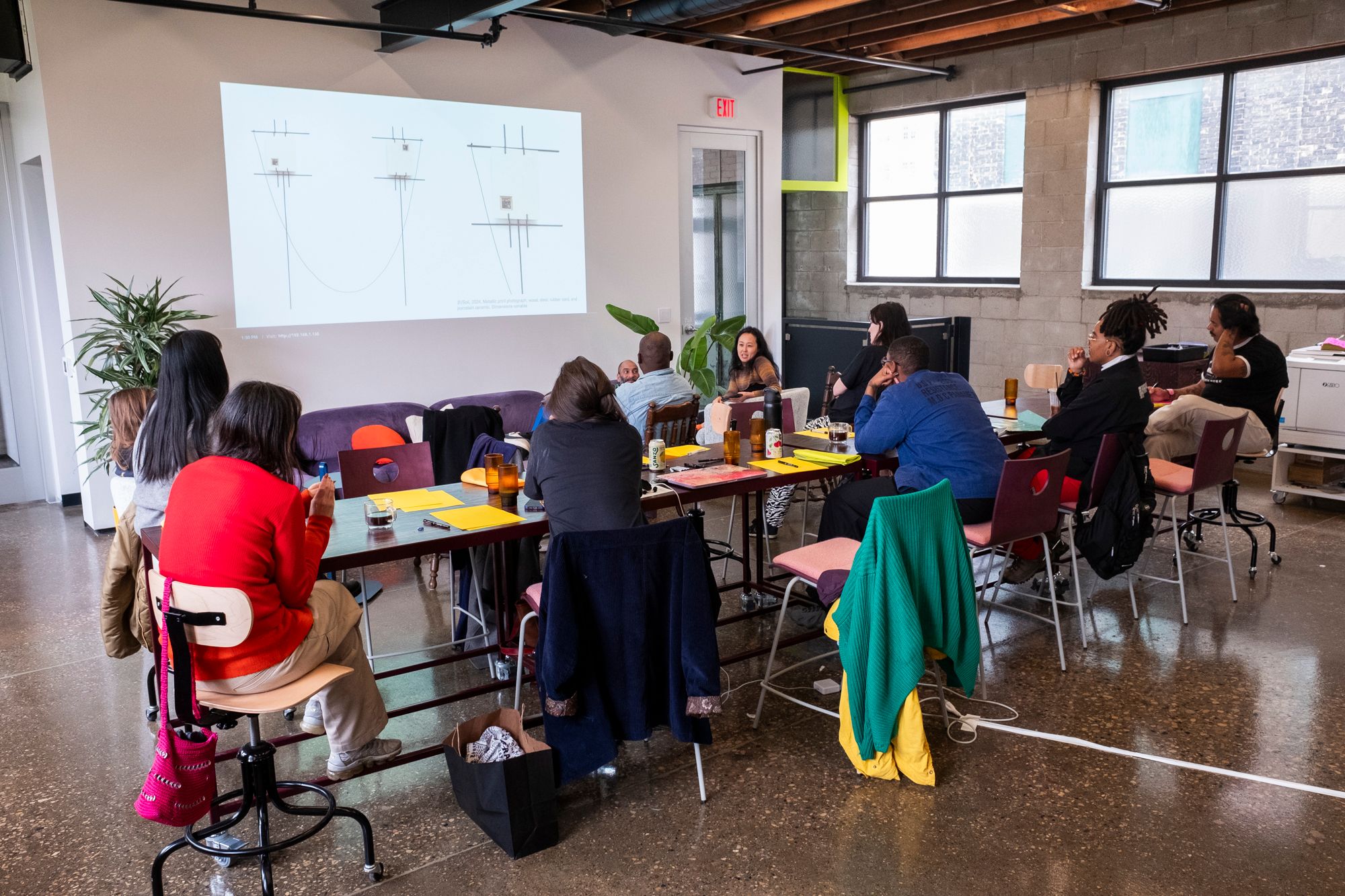
We met knowing that what we would share here could only ever be a window into a much longer, winding conversation. Over the course of an hour, clarity led to more questions, and questions yielded their own clarity. What we kept circling was not a concept but a condition: what does it mean to hold space that behaves like community rather than exhibition? What does it mean to offer a place where people feel permitted to be in public, and to recognize themselves in the process?
Essex Market, Azikiwe said at one point, nourishes “the whole body.” Over time, it became clear that the Black Painters Academy does too. What follows is a brief excerpt from a conversation about porousness, offering, need, and the work of making spaces where people can lay something down and pick something up again.
Azikiwe: The way I think about it is like that pole-and-ball game [tetherball], where you swing the ball around a pole, and it gets closer until it eventually unwinds again. Removing the self is the pole. We’re the ball. We get close, but if we get too close, we undo the whole thing. Unless someone forces us to stay attached.
Jodi: And so much of what we’re told as cultural workers is that our job is to create the pole, something fixed, directional, legible. “Exhibition” is a one-directional frame. But the spaces we’re trying to build don’t function that way. They’re reciprocal. They’re messy. They’re made of people.
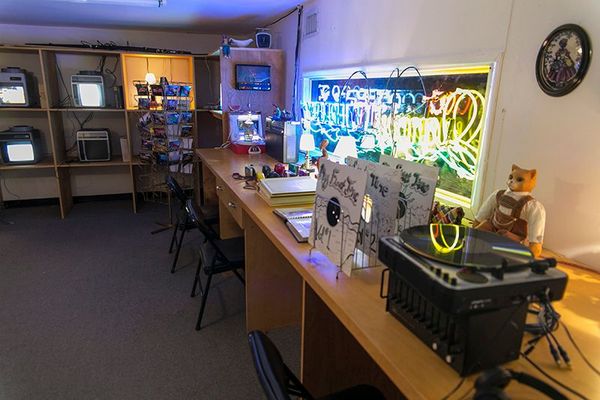
A: Right. Which is why, in Jimmy’s Thrift, the rules are simple. If someone phrases something as a yes-or-no question, the answer is yes. That’s how I ended up running a daycare of sorts for a while.
J: Because someone assumed that was an invitation?
A: They didn’t even ask. They said, “What hours are you open?” I said 11 to 6. They said, “Great, I’ll be back at six.” Next thing I know, kids. I’m reading them books. Story time. Because that’s what was needed.
J: What makes a space feel like the place where someone can do that, come back in a moment of need, instead of going home or calling a friend?
A: I came in late one day and there was a man sitting there. He said, "I was here yesterday. My daughter really liked the show, and I wanted to come back and say thank you to the person that was responsible."
I asked how his day had been. He said, "Oh yeah, my dad just died," and it had happened earlier that day.
And instead of being with family or still at the hospital signing paperwork, he came back to a stranger in a fake store. Something in the room told him this was where he needed to be. I told him, "The day is yours, let's do this." We took a tour. A lot of the objects were my dad's, so we looked at some of that.
J: Offering something doesn't mean it's what someone needs. The body wants to contract when it's wrong, or when we're afraid we might disappoint someone. Staying porous is a discipline.
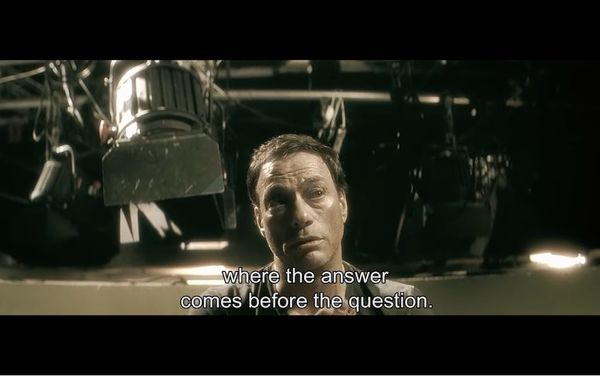
A: Exactly. That scene in JCVD, when Jean-Claude Van Damme rises into the rafters mid-scene and speaks directly to the audience, crying, confessing, collapsing the whole fiction. There's the idea, and there's the person who needs the idea. The break happens in the space between them. If you can time that break, or erase it, or fold it into the experience, then you have something real.
J: The peanuts in this exhibition became that for someone. A Market vendor walked in, grabbed a handful from the display, popped them in her mouth, and said, “These are from my country.” She took ownership of them instantly.
A: One object. That’s all it takes. If one object lands, everything else belongs to them now.
J: And suddenly we’re not talking about representation. We’re talking about publicness, about someone being able to be themselves in a place that usually restricts that.
A: Whose public? Most people don’t have many places where they can both find themselves and get rid of themselves. That’s what the Black Painters Academy tries to do.
J: AAI was created by a community of local artists as a response to displacement, so the question for us has always been how to hold space in a way that keeps people whole. Essex Market has been an exceptional place to think through how to make that visible; the work of artists and culture workers can help create civic space, not by becoming social workers, but by shaping how public life feels.
A: During a Black Painters Academy workshop at the Studio Museum, held around the museum’s long-awaited reopening, one older Black woman came in saying, “I don’t know how to do it.”And I could tell the idea of ‘if I do it, I’m still right’ was not a space she had allowed to have previously. You make one mistake, somewhere, and who knows what can happen. I said, “You need at least one place where this is true. For these 45 minutes, let’s make this that place.” And the object she took with her could hopefully remind her of that later.
Another woman trying to make a family portrait said, “I can't paint people.” She had ancestors in the sky and relatives down here. I said, “Okay, don’t think of them as people, think in shapes. What shape is the first memory you have of each of these people?” She started naming them, giving each shape meaning. She could see her idea, and move her idea, and take a reminder of her idea with her. I don’t think she left with what she intended to, but I hope she left with something she could keep.
J: We’re trying to practice that pause as well, slowing the work down long enough to see whether the structure is actually serving people or if it’s quietly reenacting an old hierarchy. Because I work inside an organization, I often think about this through the lens of mutuality: how do we name care, how do we name the labor that’s typically uncounted, how do we avoid the extractive default habits of the field. It's deeply unsexy, but we’ve been trying to codify those commitments through our contract processes for years now. It started with a 2020 project Drawn Together, which ended up reshaping so much of our thinking.
AAI was open enough to let that process unfold, but not without friction. It required slowing the organization down and being willing to treat governance itself as a site of practice, not just administration. Our history as an artist-founded organization made that kind of reshaping possible, but it still required a deliberate choice to let artists intervene at the level of structure, not just program. We were shifting from simply asking for support to interrogating how support is given.
A: For me it was once vanishing into Jimmy’s and twice starting the Black Painters Academy. Trying to live inside of I don’t know and I don’t need to know. Trying to focus on if it works, rather than try to keep it working.
People ask, “Is this an art project?” Because art is the only field where we accept unrewarded labor as central. If it doesn’t fit their sense of usefulness, they file it under art. What I’m trying to get them to see is: maybe your idea of reward is too narrow. It doesn’t have to be fun in order for it to be crucial.
J: Essex Market has been that for us too. It gives something back. Being here has made us more accountable to the fact that we’re already in cultural space, and our role is to contribute to its civic life, not overwrite it.
Is the work to take that association away, or to widen it so it can hold more?
A: If my physical body is present, someone can tell me I am wrong, and if (usually when) I get it wrong, I can (try to) fix it. Someone tells me I messed up, I adjust. That’s the whole practice. That’s why I change my handwriting every year. To not get attached to the shape of something that’s just supposed to be a vehicle.
J: Practice toward intention.
A: Exactly.
J: Five years of Black Painters Academy is not insignificant. Was it ever the goal?
A: I never thought of it in years. I signed a lease. Time showed up because someone named it. What I know is: as long as people find it worth their time, and as long as I have a car and a space and a way to move resources toward people who should have more of them, it would feel irresponsible to stop.
This conversation took place in January 2026, and was originally published in the Spring 2026 issue of Best Wishes.
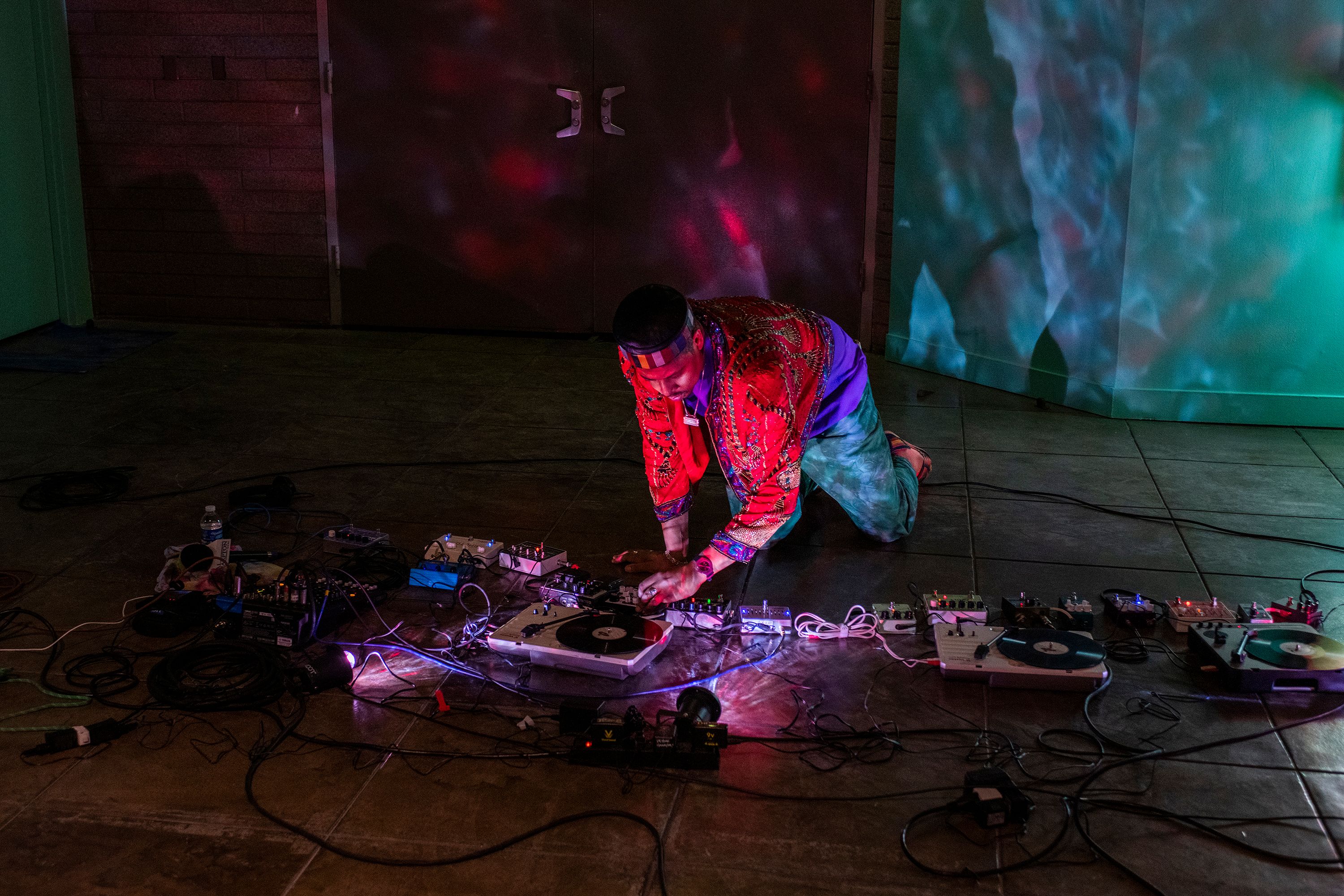
First Horizons First Excursions, commissioned by The Highline, shown here as performed at CAAM in Los Angeles, CA, image courtesy of the performer
Working across performance, sculpture, painting, sound and video, Azikiwe Mohammed is a crafter who builds physical spaces that include Blackness and the stories of the people of this land. Sometimes that land is physical, and other times it lives in our bodies.
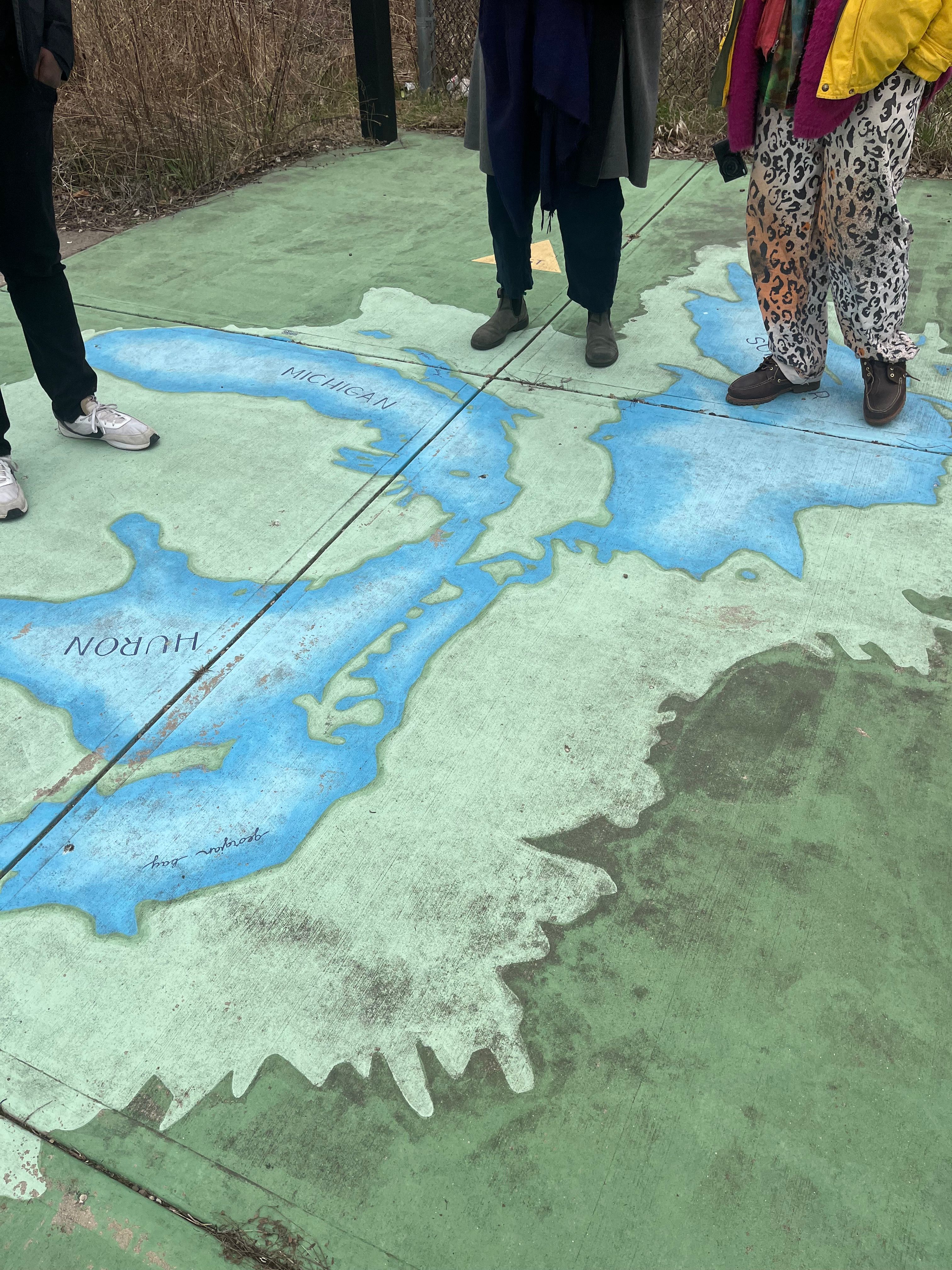
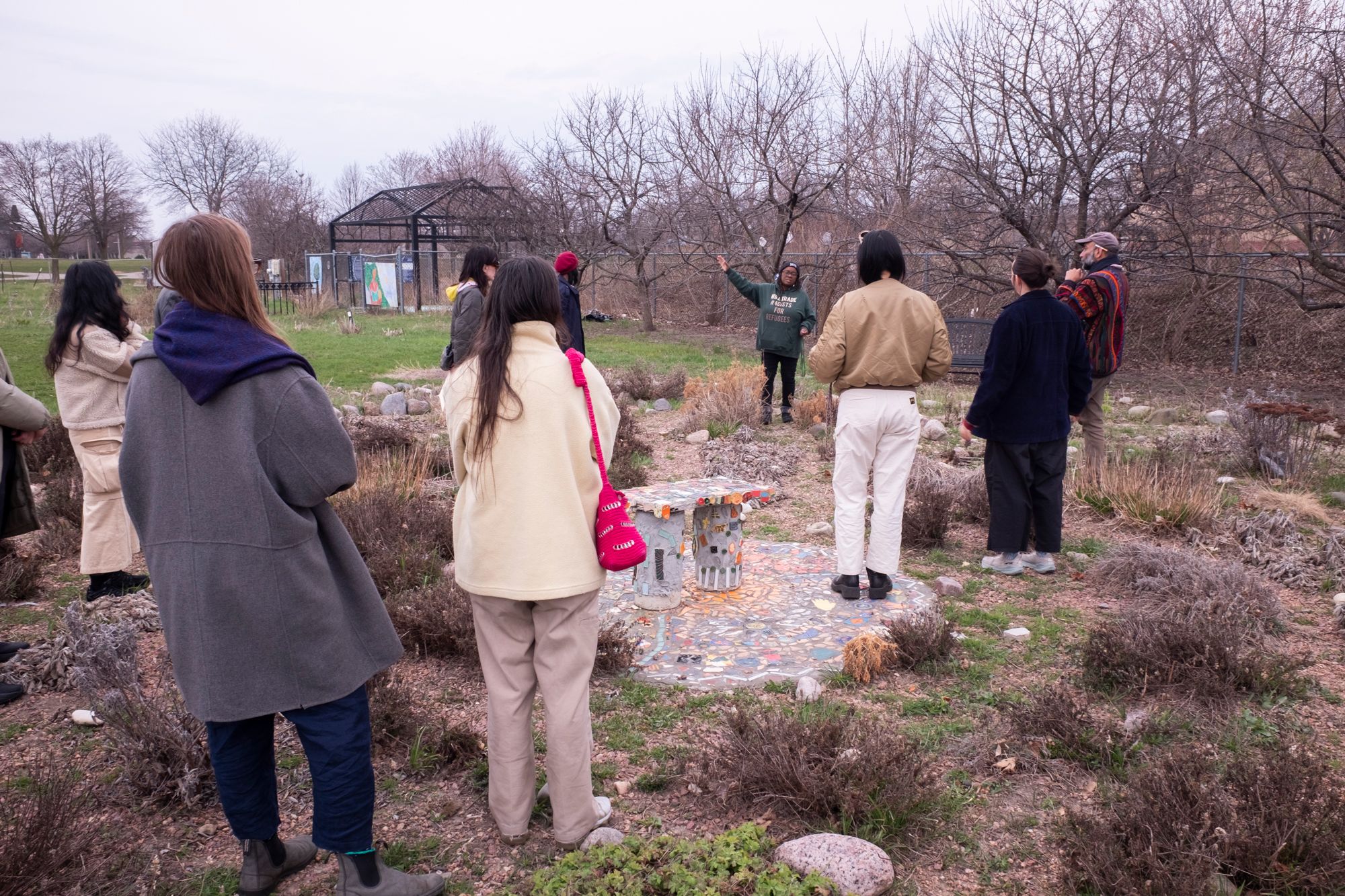
These attempts at land shapings have taken place at The High Line, NY; California African American Museum, LA; Fairmount Water Works, Philadelphia, PA; Canada Gallery, NY; Transformer, Washington, D.C.; John Michael Kohler Arts Center, Sheboygan, WI; The Studio Museum in Harlem, New York, NY; and MoMA PS1, Queens, NY; among others. Mohammed is the recipient of a Foundation for Contemporary Arts Grants to Artists Award (2023), a Rauschenberg Artists Fund grant (2021), a Rema Hort Mann Foundation Emerging Artist Grant (2016), and an Art Matters Foundation Award (2015). In 2022, he was featured on Art21’s New York Close Up digital-film series on artists living and working in New York City. Azikiwe Mohammed lives and works in New York, NY.
Jodi Waynberg is a New York City - based arts administrator and the Executive Director of Artists Alliance Inc. (AAI), a nonprofit on Manhattan's Lower East Side dedicated to supporting cultural practitioners through exhibitions, residencies, and public commissions.
Her curatorial projects include The Real Estate Show, What Next: 2014, a restaging of the historic 1979 artist intervention into New York's housing crisis; Shadow Cabinet: A Loyal Opposition Response, a group exhibition examining power, resistance, and the aesthetics of protest; Keep Me Nearby, foregrounding six decades of gentrification and community activism on the Lower East Side; and ART/WORK, a landmark exhibition on the 1970s federal employment program for artists through New York City's CCF CETA Artists Project.
Since 2019, Waynberg has collaborated with historian Molly Garfinkel on a multi-year research project investigating the Comprehensive Employment and Training Act (CETA) and its impact on cultural labor. Her writing includes Suzanne Jackson: What Is Love (SFMOMA and Princeton University Press, 2025). Coverage of her work has appeared in The New Yorker, Artforum, Art in America, Artnet, and WNYC.
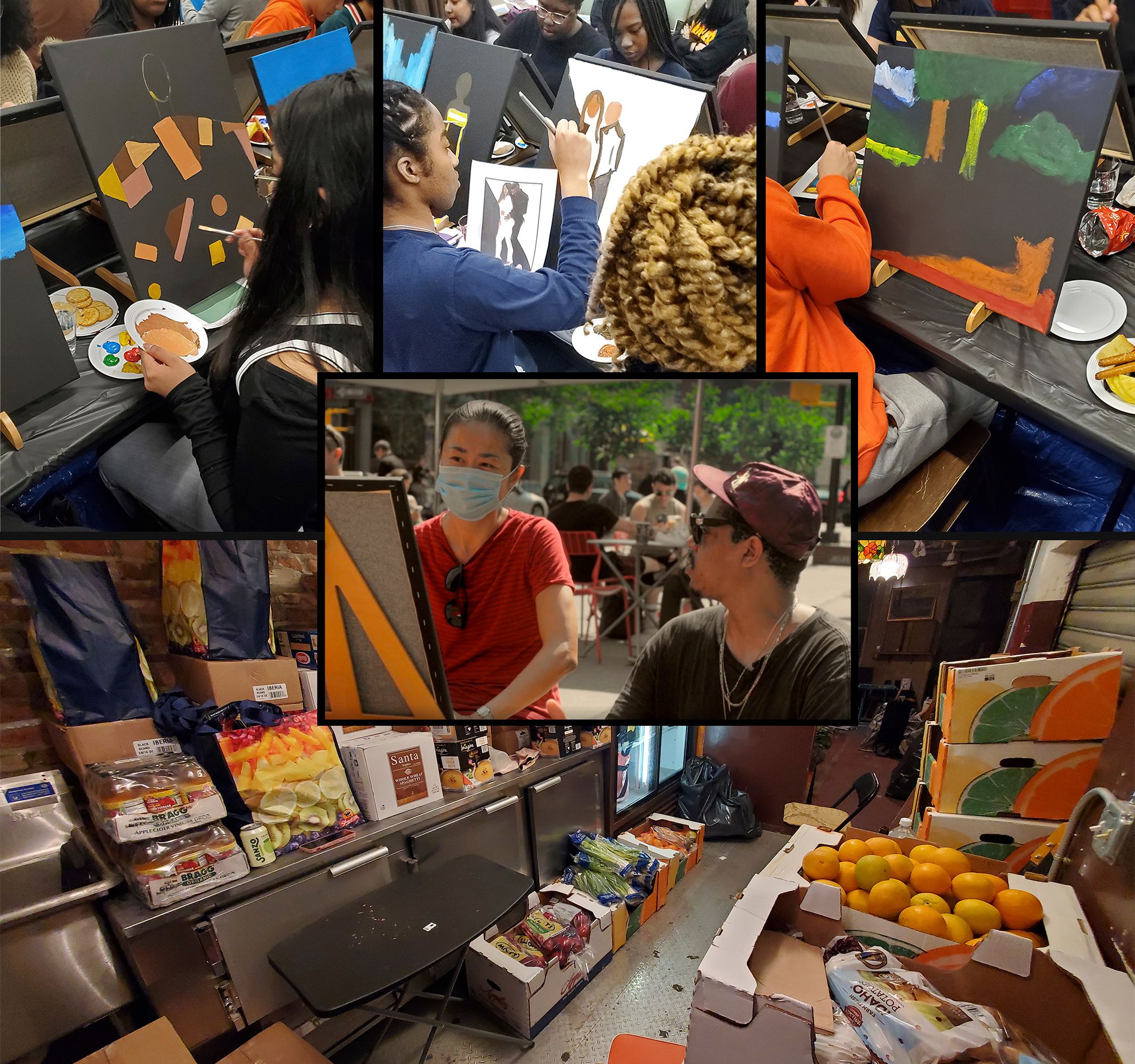
Black Painters Academy at St. John's University, Black Painters Academy at Rashid Johnson's Red Stage via Creative Time, and the New Davonhaime Food Bank
Black Painters Academy aims to use the arts to redirect the resources of the sometimes called art world to people that have less / are not in that space, and, for those who want to be in that space, they aim to make a space for them that feels like their lived experiences can be seen / celebrated and do so in a sustainable fashion. Continued support not opportunistic advocacy. They do this through curating shows, professional development, in-person workshops, and, you can't think if you can't eat, so, they run a food bank called the New Davonhaime Food Bank, operating out of their our headquarters in Chinatown NYC.
Artists Alliance Inc. is dedicated to launching, strengthening, and advancing the vision of emerging and underrepresented artists and curators through fully-funded residencies, paid exhibition opportunities, and commissioned projects.
Rooted in the Lower East Side (a long-standing epicenter of creative experimentation and cultural diversity) and in NYC at-large, AAI cultivates art practices that challenge the way we experience ourselves, our communities, and our world. Through three initiatives—Cuchifritos Gallery + Project Space, LES Studio Program, Public Works—AAI aims to widen the audience for contemporary art and encourage public dialogue using art as a catalyst.